Factories & industry
Heavy machinery sets short, costly peaks. The battery covers them and earns on the markets in between.
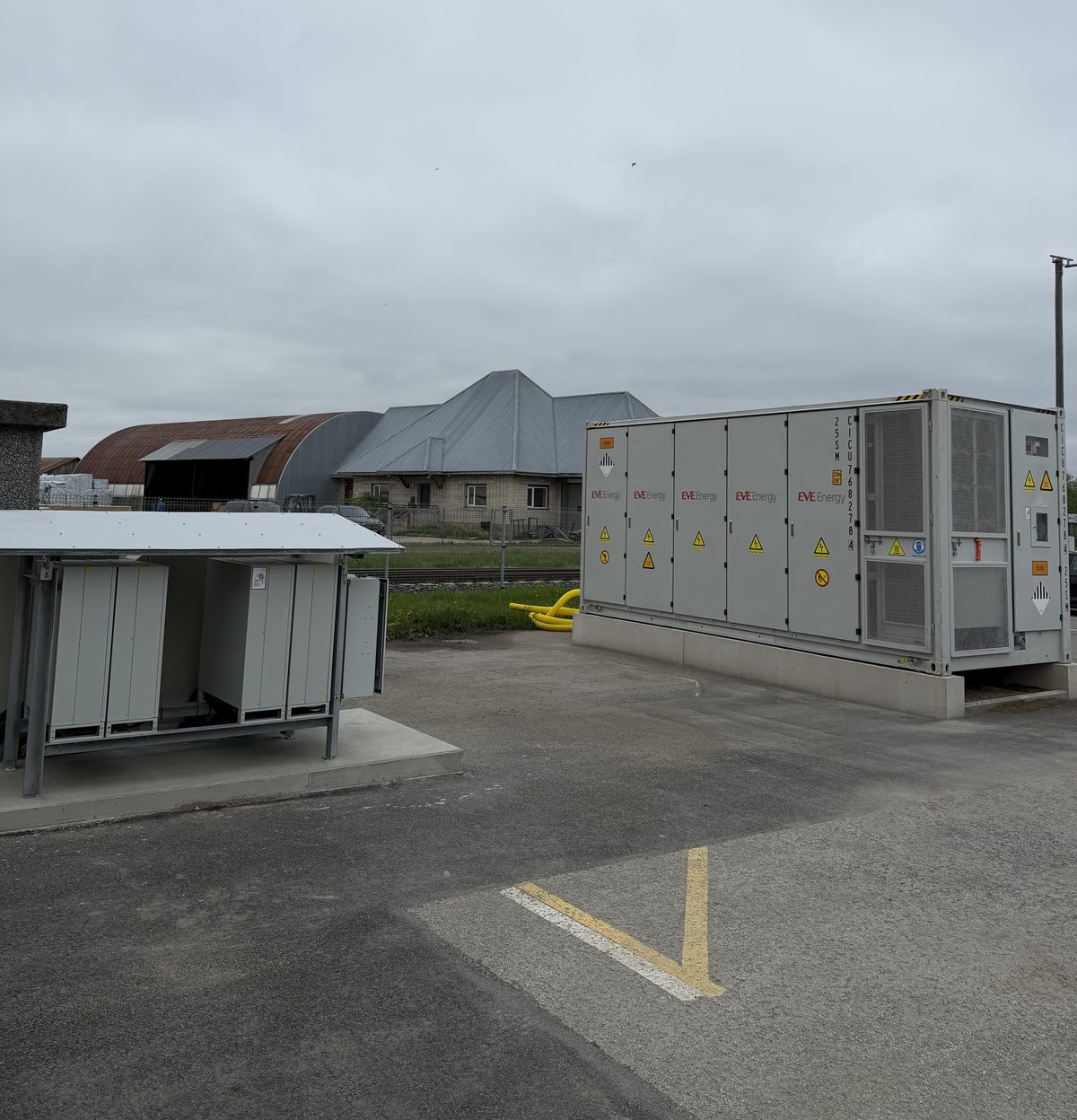
Shipyard industrial batterySolutions · Business & industry
Battery storage for factories, shopping centres, offices and farms in the Baltics, Eastern Europe and Finland. Lower peaks and grid fees, backup capacity and market income from one system.
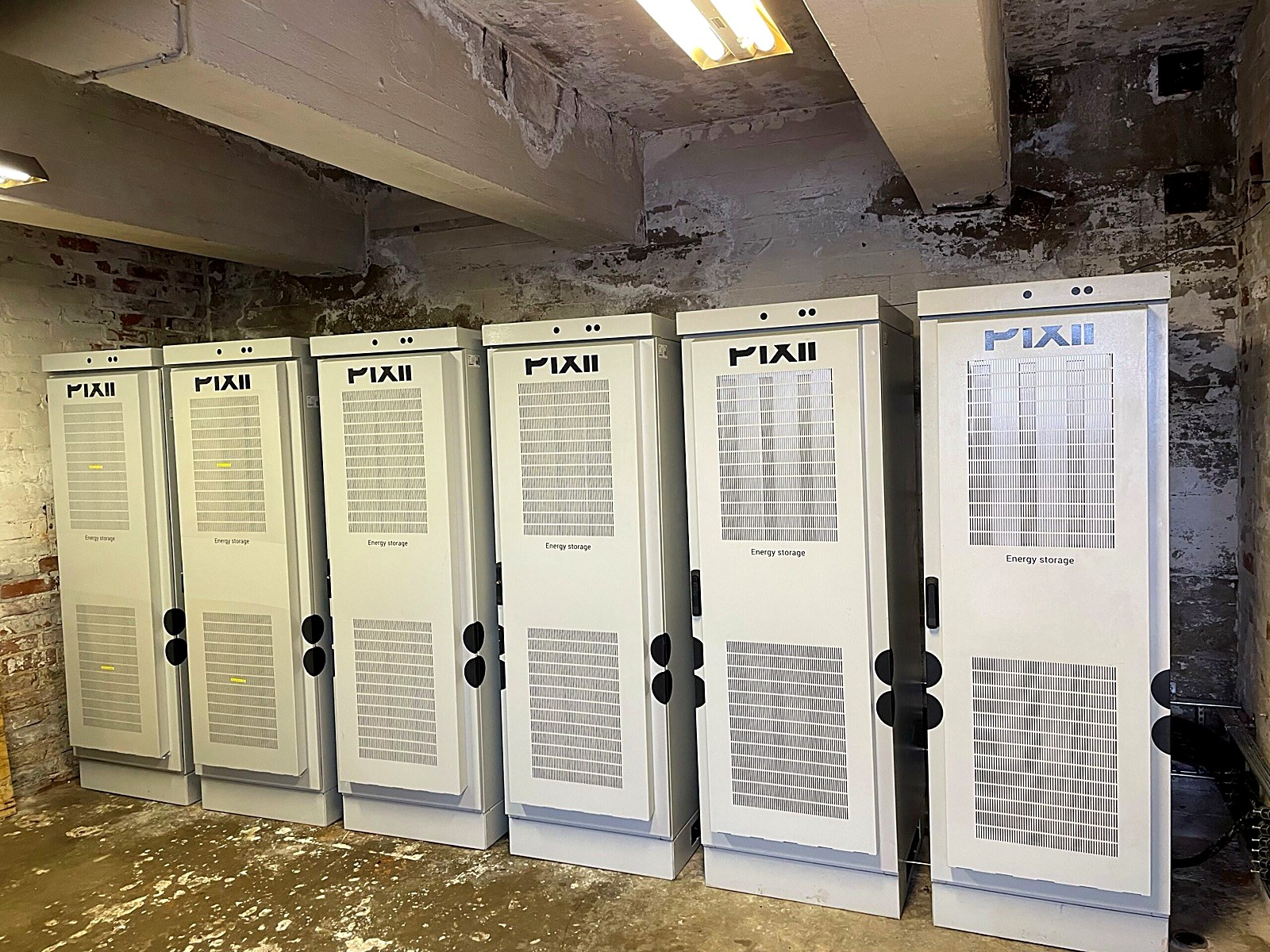 Shipyard industrial battery · 400 kW / 500 kWh
Short demand peaks decide what you pay for grid capacity.
Prices swing between night, opening hours and evening.
Rooftop solar is sold cheap at midday.
A grid outage stops production or trade.
Heavy machinery sets short, costly peaks. The battery covers them and earns on the markets in between.
Shipyard industrial batteryOpening hours meet the expensive hours. Stored cheap power covers them, so less is bought at the top price.
Three retail storesGrain drying peaks do not match solar output. The battery moves daytime solar into the drying hours.
Farm battery integrationEvening charging creates high peaks and grid costs. The battery covers them with stored solar and wind.
Renewable site and EV chargingYour grid fee follows your highest peaks. The battery covers them, so the grid only ever sees the capped line. Peak shaving and grid fees
In practice: one battery covers the peaks of two grid connections at Tapa Mill.
Many companies think they need to export power and hold a sales licence to earn on aFRR and mFRR. They do not. How a business earns on aFRR and mFRR
The battery covers 500 kW of your own load. Production keeps running.
For the grid, 500 kW less consumption frees the same capacity as 500 kW sold.
You are paid for that flexibility, without exporting power or holding a sales licence.
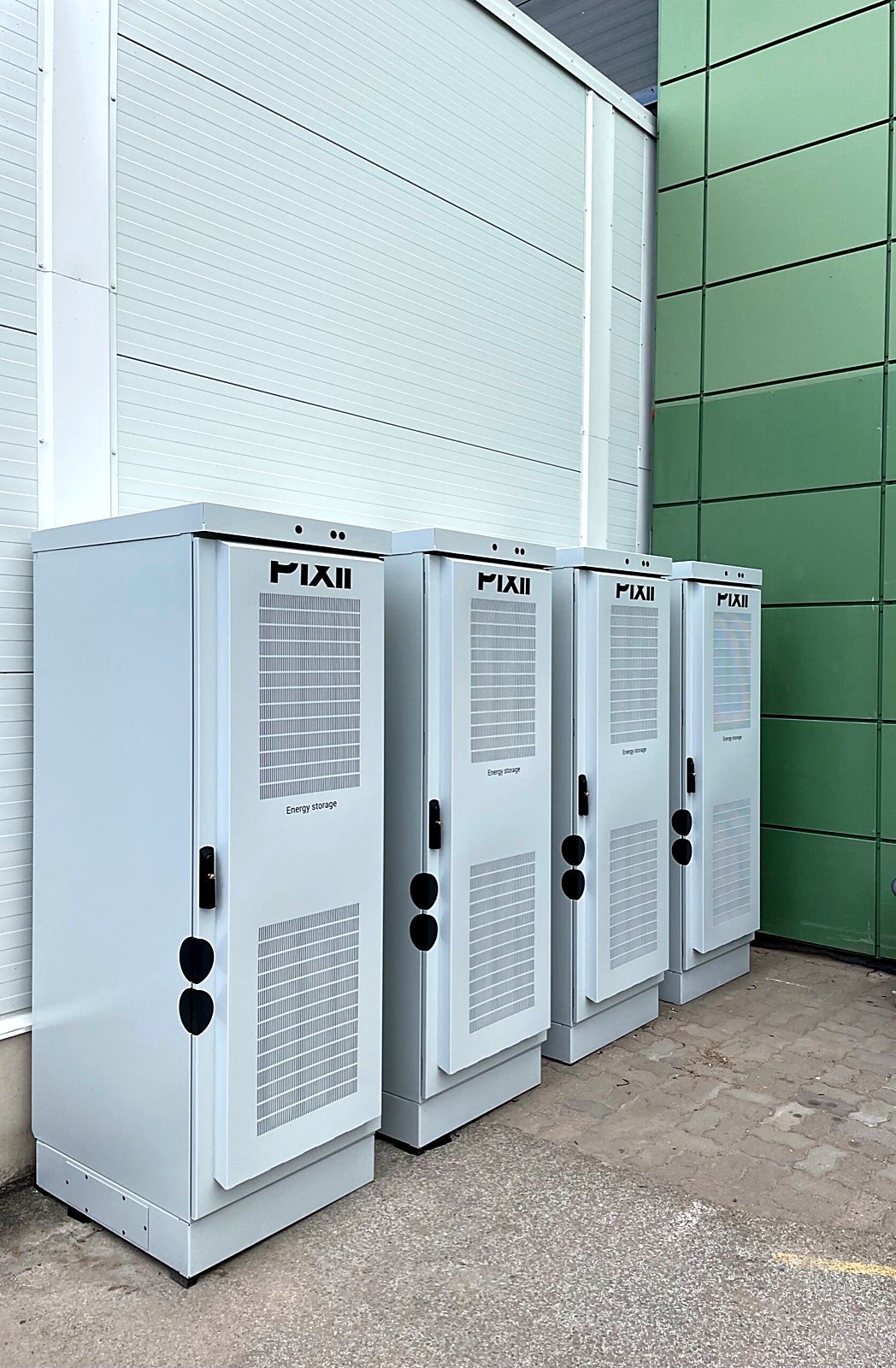
A retail cooperative in southern Estonia added battery storage across three stores. Each store now uses stored energy instead of buying at the most expensive hours.
−30%
electricity cost, up to100%
up to −30%
Also running: Tapa Mill (640 kW / 4 MWh) · Kikas food producer (40 kW / 103 kWh) · Võru Tarbijate Ühistu, Rõuge store (420 kW / 860 kWh) · Jahvataja farm battery (945 kW / 1.935 MWh)
Included in every project: Sizing from your data · Hardware · Grid paperwork · Grant help · Testing and training · Market connection
The price depends on the battery size, the site and the grid connection. Send us your load data and we will size the battery and show the price, savings and payback.
Send your load data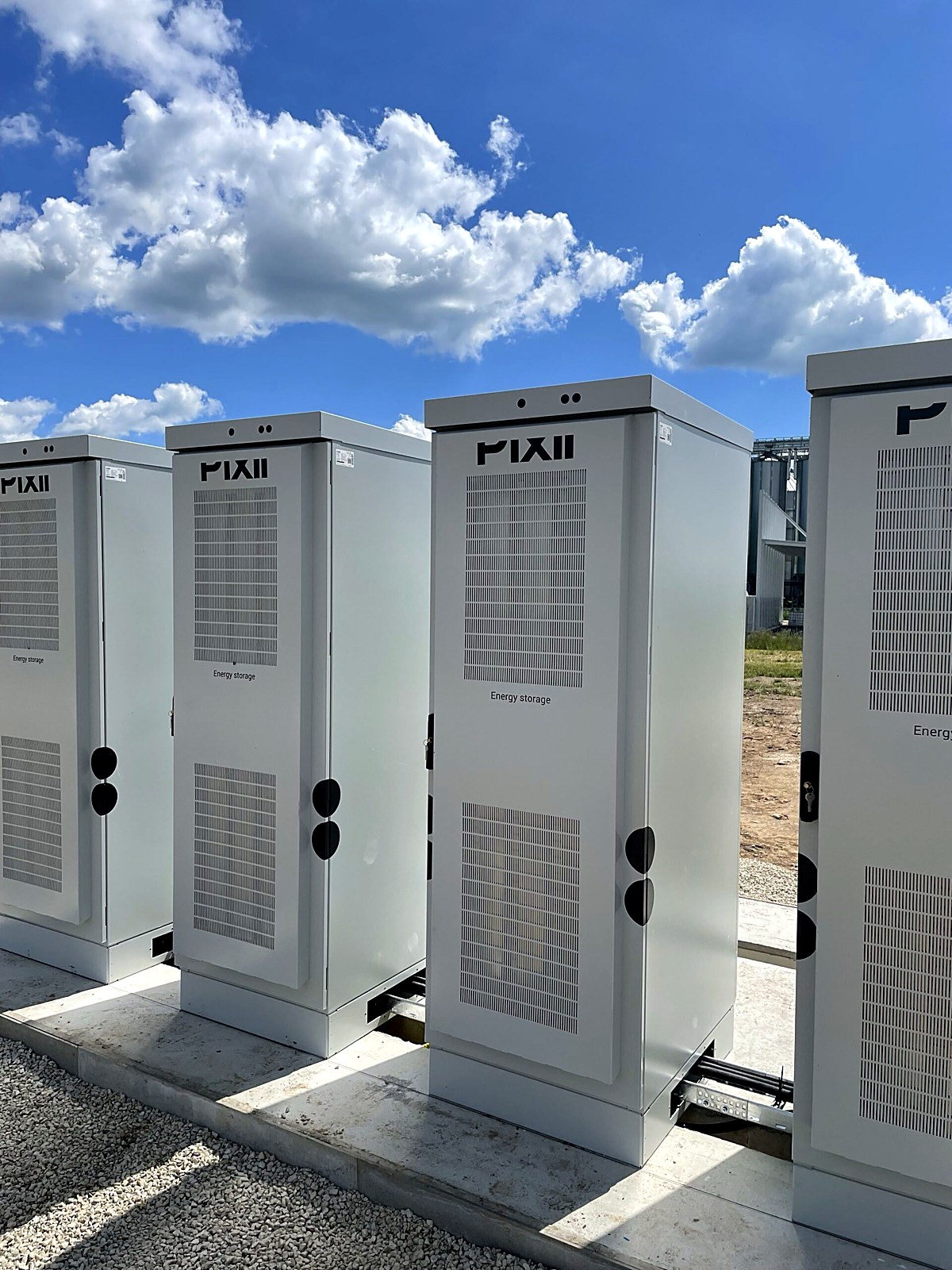
Yes, mainly by covering the short peaks that set your grid fees and by using stored energy in expensive hours. A retail cooperative cut its costs by up to 30%.
It depends mainly on the power and capacity you need (kW and kWh) and on whether battery cabinets or a container suit the site. The grid connection, installation and site work, and the set-up for the energy markets also affect the price. A grant may be available for your project, and we help you check it. Send us your consumption data and we will give you a first estimate before you commit to anything. Battery price and payback time
Sites where electricity is a significant cost: factories, shopping centres, offices, farms and EV charging sites. A fluctuating load is not required; what matters is the size of your bill and your peaks. Published examples include a wood mill (Tapa Mill, 640 kW / 4 MWh), a food producer (Kikas, since 2023), a cooperative store in Rõuge and a farm with a grain dryer (Jahvataja OÜ). All references
No. You take part by reducing your own consumption, not by selling to the grid. An optimisation partner handles the market side.
Backup capacity can be part of the design. We size it with you from your consumption data and what needs to keep running.
Yes. Each site is sized from its own data, and the project can run under one contract.
Yes. We help you read the data and report the savings, for example to your finance team.
In about 3 years, an estimate based on the last 2 years of Nordess projects. In Estonia there are also grants for energy storage, and we help with the application.