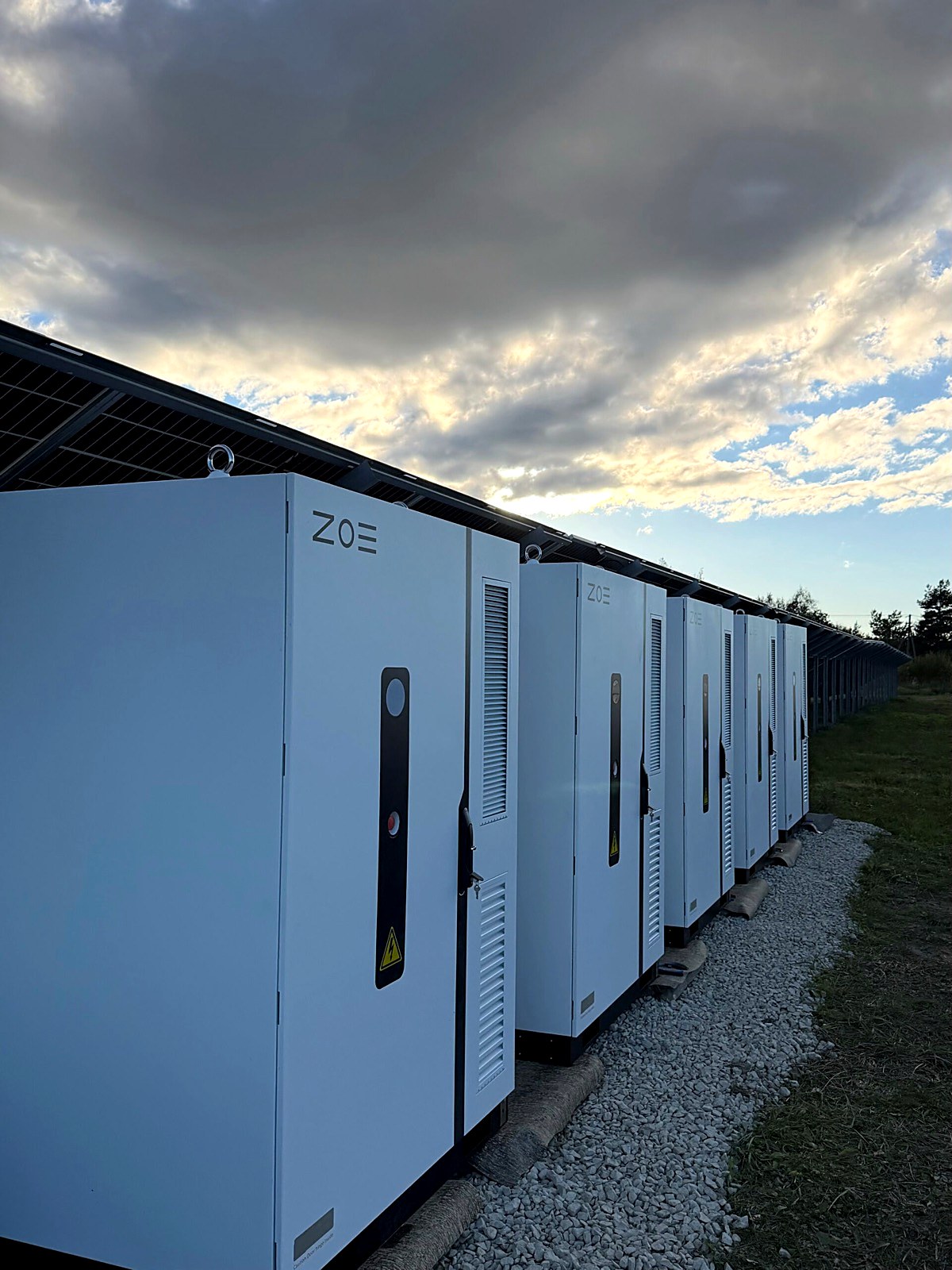
Battery cabinets beside a solar park in western Estonia at night

One day
of a battery.

The same battery earns in four ways, every day, run automatically. Scroll through 24 hours.

03:00Night

Charge while power is cheap.

Night prices are usually the lowest of the day. The battery fills from the grid, automatically.

~€40 / MWhat night in this example, against ~€180 at the evening peak. That gap is the margin.
Illustrative day, not client data.
12:00Midday

Store the solar you would have wasted.

At midday the panels can make more than the site uses. Instead of exporting cheaply or curtailing, the surplus goes into storage.

Surplus keptfor the evening instead of sold back near zero.
Illustrative day, not client data.
18:00Evening peak

Cover the peak. Sell at the top.

When demand and prices jump, the battery feeds the site. The site draws less from the grid, and stored energy is sold high.

650 → 460 kWpeak grid draw in this example. A smaller peak means lower grid fees.
Illustrative day, not client data.
22:00Late evening

Earn while it waits.

Between cycles the battery stands by for grid balancing (aFRR / mFRR). The grid pays to keep it ready. You never trade anything yourself.

aFRR / mFRRreadiness sold through an optimisation partner.
Illustrative day, not client data.
How a project runs

From first call to handover.

Five stages, with the durations we see in practice. Smaller projects are usually delivered in about a month after the decision. Larger systems take up to 8 months, mostly manufacturing and shipping.

  1. 1First contact1–3 days

    A few emails and one or two calls. We ask for consumption data, site details and your goals.

  2. 2Analysis & validationA few days – 2 weeks

    We check the grid contract and grid capacity, estimate savings and income, support your financial analysis, help choose an energy trader and size the battery.

  3. 3Decision & contractQuick

    You decide. One contract covers the agreed scope.

  4. 4Preparation & deliveryAbout 1 month for smaller projects · up to 8 months for the largest

    Documentation, equipment order and project timeline. Larger systems take longer because of manufacturing and shipping from China.

  5. 5Testing & handover1–2 weeks

    Setup, testing, training and final documentation. Then the battery starts earning.

Stage one starts with your consumption data. Send it over and we come back with a first view of your site.

Talk to us

Questions about the process.

How long does a project take, from first contact to a running battery?

Smaller projects are usually running about a month after the decision; the largest take up to 8 months. Before the decision, first contact takes 1–3 days and the analysis a few days to 2 weeks.

What data do you need from me?

Your consumption data (or production data for a park), site details, your grid contract and grid capacity, and your goals. That is enough for a first estimate of battery size, savings and payback.

Why do larger systems take longer?

Mostly manufacturing and shipping. Small cabinet systems can be delivered quickly, while large container systems are built to order and shipped from China.

What does the contract cover?

One contract covers the agreed scope: sizing, hardware, help with grid paperwork and grants, testing, training and the market connection. You have one contact from start to finish.

What happens at handover?

Setup, testing, training on site and final documentation, usually within 1–2 weeks. Then the battery starts earning.

Who operates the battery once it is running?

An optimisation partner runs it on the markets automatically, so you never trade yourself. We help you choose the partner during the analysis and stay your contact.