Peak shaving means using a battery to cover the short spikes in a site's electricity demand. Depending on your grid contract, those peaks can set what you pay for grid capacity, so a lower peak means lower grid fees. The same battery can also shift energy to cheaper hours, earn on reserve markets and provide backup power.
- A few short demand peaks can set what you pay for grid capacity.
- A battery covers the part of each peak above a set limit, so the grid sees a lower peak.
- In between, the same battery shifts energy to cheaper hours, earns on aFRR and mFRR and can provide backup power.
- Sizing starts from a year of 15-minute or hourly consumption data: peak height sets the kW, peak duration the kWh.
A few minutes that set the bill
Most businesses read their electricity bill as a price per kilowatt-hour. But part of what a factory, shopping centre or office pays is often set by something else: how high its consumption peaks, even for a few minutes.
Machines start together, cooling kicks in on a hot afternoon, a dryer runs alongside a production line. These spikes may come only a few times a month, yet they can decide what you pay for grid capacity. A battery makes them smaller without changing how you work.
What sets your grid fee
Grid tariffs differ by country, grid operator and contract, so check your own. In general, a business pays for two things:
- Energy: the kilowatt-hours you use.
- Capacity: how much power the grid must be ready to deliver to your site, in kW. Depending on the contract, it follows your highest measured peaks or the connection capacity you have agreed.
That is why a short peak can be expensive: the grid has to be ready for your highest moment, not your average one. A lower peak can also mean you do not need a larger connection when you add machines or chargers.
How a battery caps the peak
The battery sits at your grid connection and follows the load. You set a limit, for example the level a normal working day stays under. When the load climbs above it, the battery covers the difference, so the grid only sees the capped line.
- Charges in cheap hours, at night or from your own solar.
- Waits fully charged for the load to pass the limit.
- Covers the part above the limit while the peak lasts.
- Recharges before the next peak.
Peak grid draw on a busy working day.
−
The part of the peak above the limit.
=
A smaller peak means lower grid fees.
Illustrative example from our How it works page, not client data.
What else the same battery earns
Peaks are short, so the battery works in between:
- Price shifting. It charges when power is cheap and covers your load when it is expensive.
- Reserve markets. Through an optimisation partner, it stands ready for aFRR and mFRR signals and is paid for that readiness, without exporting power or a sales licence. How that works →
- Backup power. Part of the capacity can be kept for processes that should not stop in an outage.
The split between peaks, backup and markets is agreed in the design. Peak shaving comes first; market income comes on top.
How a peak-shaving battery is sized
We size the battery from your own consumption data, not from a catalogue:
| Peak height | How far the peaks rise above your limit. Sets the power, in kW. |
|---|---|
| Peak duration | How long the peaks last and how often they follow each other. Sets the energy, in kWh. |
| Other uses | Price shifting, reserve markets or backup, if you want them too. |
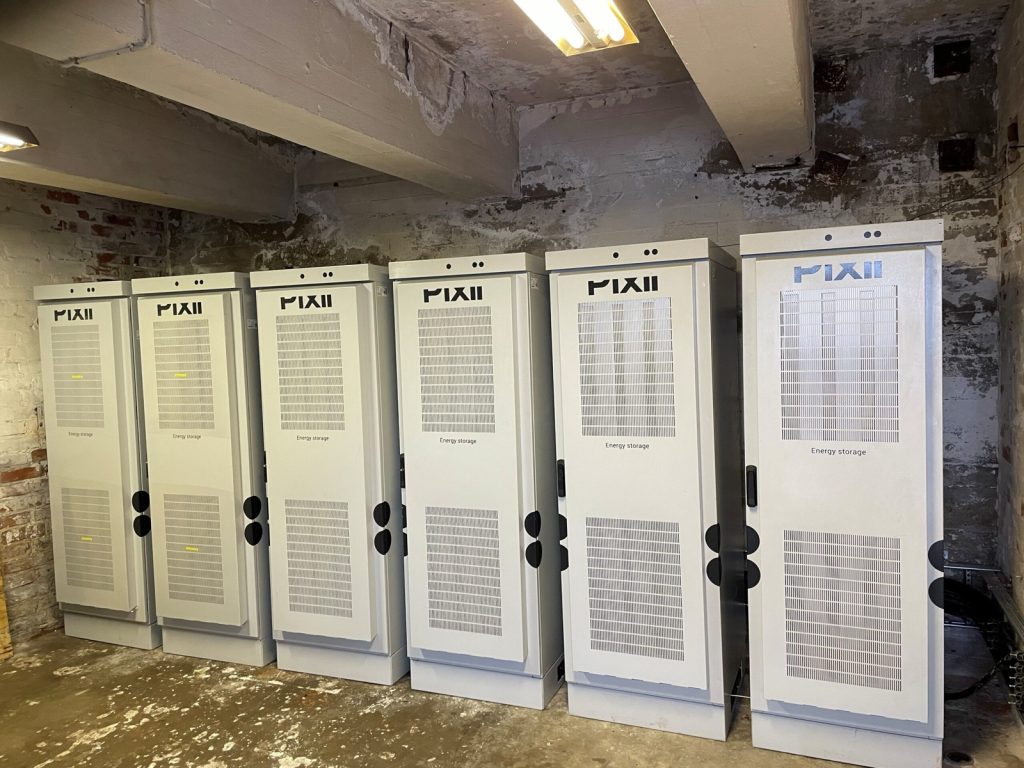
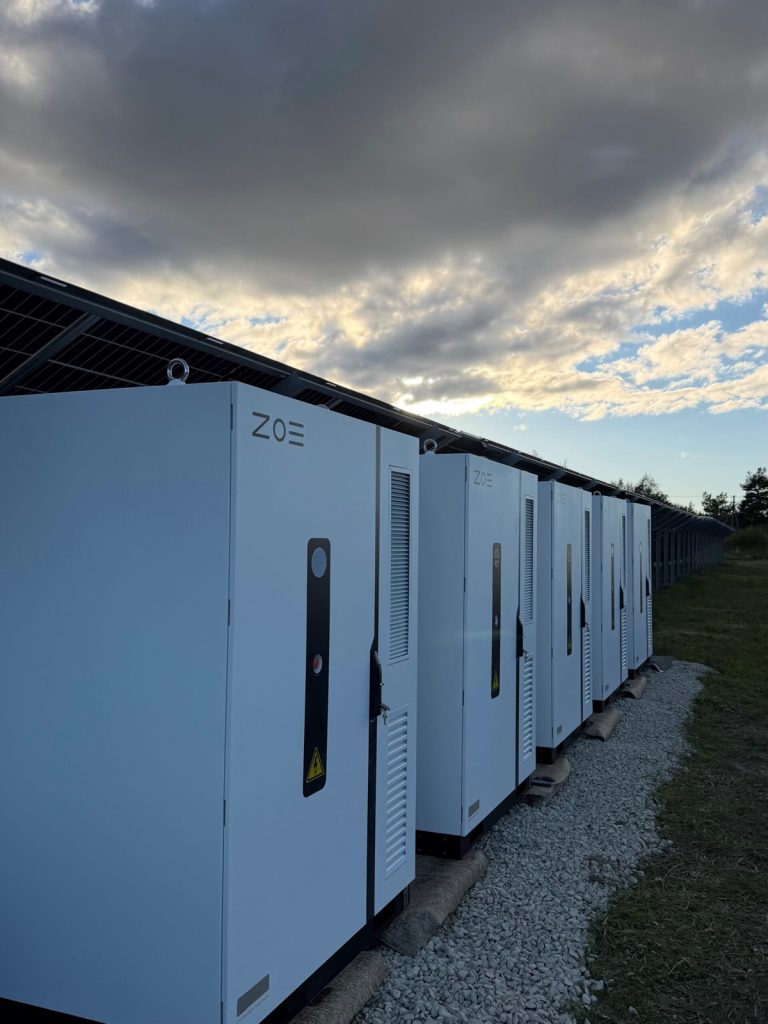
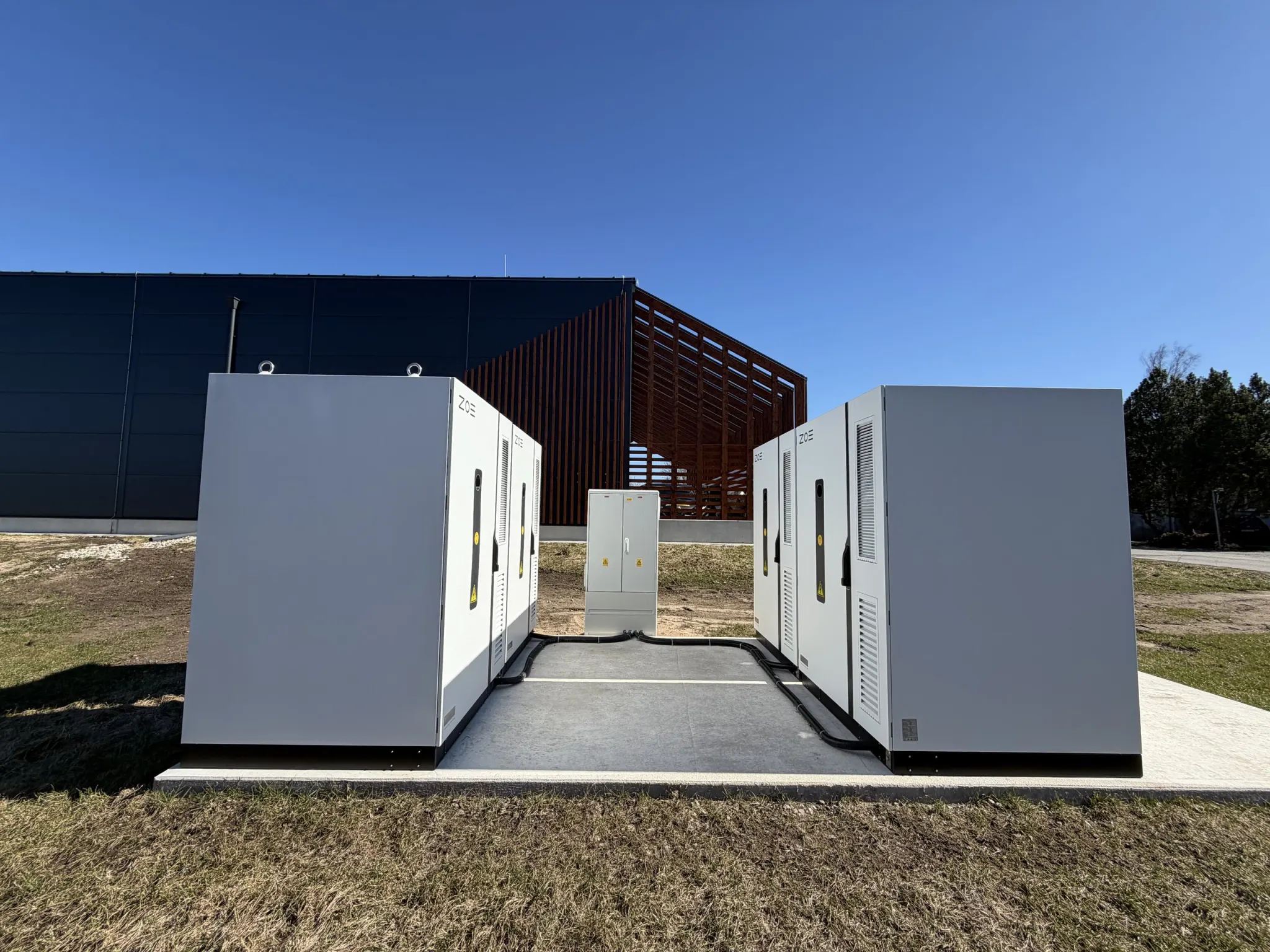
In the example above, cutting the peak from 650 to 460 kW takes at least 190 kW of battery power; the kWh depend on how long the peaks last. We build 50 kW – 10 MW systems, and modular battery cabinets cover sizes up to about 1 MW.
Is my site a good fit?
Peak shaving pays best where some of these are true:
- Short, sharp peaks from machines, cooling, heating, drying or EV charging.
- A large capacity-based part in your grid bill.
- A grid connection near its limit.
- Your own solar, sold cheaply at midday.
- Processes that should not stop in an outage.
Factories, shopping centres, offices and farms often fit. See our Business & industry page.
Will it put production at risk?
No. The battery does not control your machines; it only changes where the power comes from for a few minutes. If it is empty or offline, the site draws from the grid as before. The limits for peaks, backup and markets are set in the design, and the optimisation partner works only within them. We also help you read the data and report the savings to your finance team.
What if my peaks are rare?
Then a fairly small battery can remove them, and where the fee is capacity-based, it follows the lower peak. Between peaks the battery still shifts energy and earns on the reserve markets. Your consumption data shows quickly whether it is worth it.
Examples from our projects
- Three retail stores in southern Estonia, 300 kW / 800 kWh in total: the batteries store cheap or solar power and cover the stores’ load in expensive peak hours. Electricity costs fell by up to 30%. Reference →
- Finnish shipyard, 400 kW / 500 kWh: heavy machinery used to create high peaks. The battery now cuts them, provides backup capacity and earns on the flexibility markets. Reference →
Payback is about three years, an estimate based on the last two years of Nordess projects. See How quickly does battery storage pay for itself?
What we need to start
About a year of consumption data, ideally in 15-minute or hourly intervals, from your grid operator or meter; your grid contract and connection capacity; and your goal. From that we size the battery and give a first estimate of savings and payback, before you commit to anything. Smaller projects are usually running about a month after the decision; see How it works.