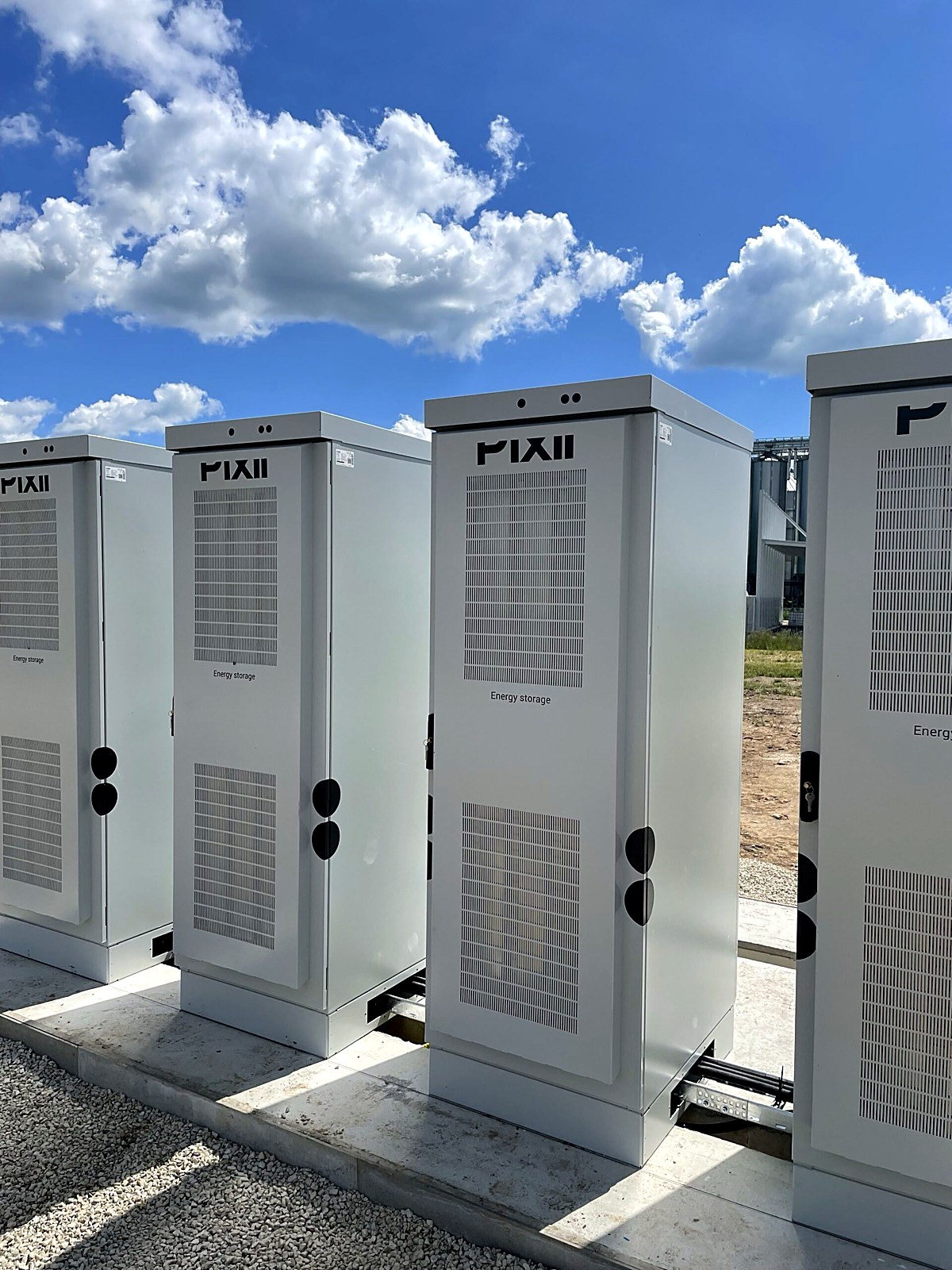
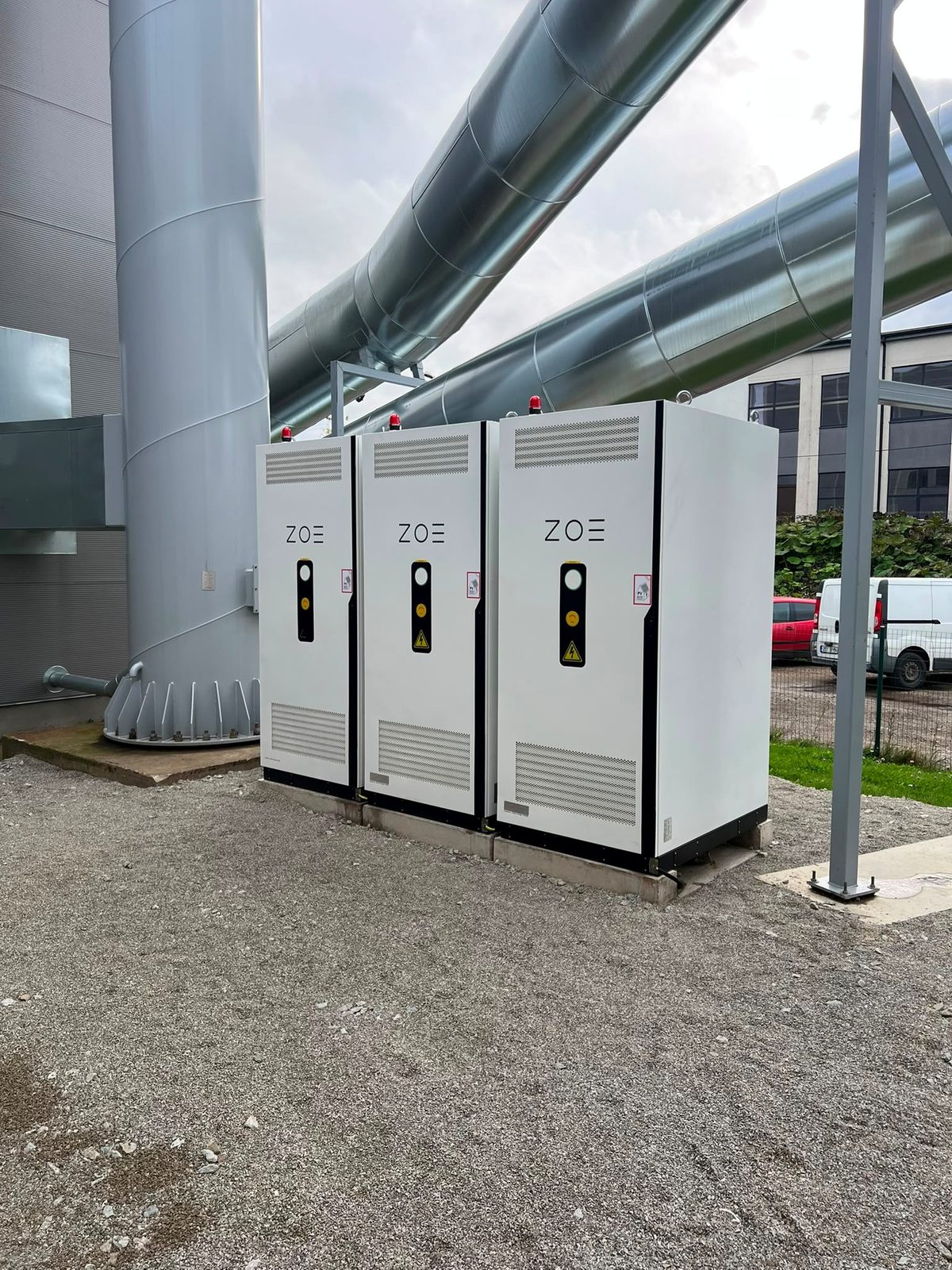
Modular battery cabinets
One or a few cabinets next to the existing inverters. Small projects on low voltage can run in about a month.
Solutions · Energy parks
Battery storage for solar and wind parks, small hydro and CHP plants in the Baltics, Eastern Europe and Finland. Curtail less and earn more from the same grid connection.
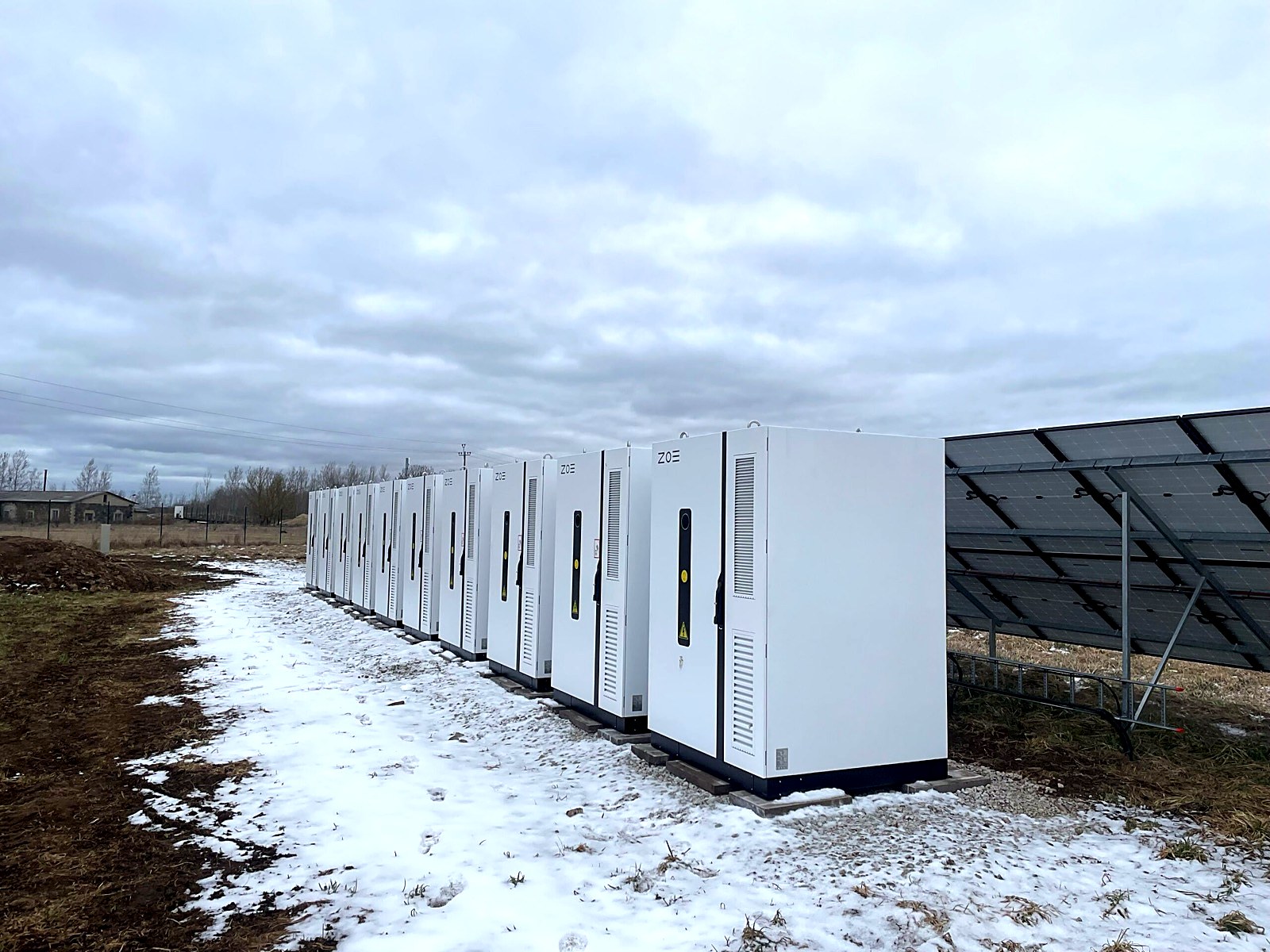 Battery · 500 kW / 2.15 MWh
By energy source
Solar, wind, small hydro and CHP lose money at different hours. Choose your source: the problem, what the battery does and a project already running.
For solar parks, with batteries from 50 kW to 10 MW. The battery is added beside the existing inverters and uses the same grid connection.
The problem
What the battery does
Stores the midday surplus and sells it at the evening peak. At night and in winter, when the panels are idle, it uses the same connection to earn on grid-balancing reserves (aFRR / mFRR).
Send your solar park dataFor parks with one or a few turbines, up to about 10 MW, including older parks that want more from the same grid connection.
The problem
What the battery does
Captures the surplus, smooths the output and sells at better hours. Between cycles it earns on aFRR and mFRR; on Saaremaa it does so every day.
Send your wind park dataFor sites where several sources share one grid connection, and for small hydro and CHP plants that use their connection only part of the year.
The problem
What the battery does
Shares the existing grid connection, shifts output to the peak hours and earns on grid-balancing reserves while the plant is idle, so the connection works all year.
Send your plant dataMatching references
Large energy projects can take one to two years of permits. We focus on parks where a battery can be running in weeks and start earning while the market is good.
One or a few cabinets next to the existing inverters. Small projects on low voltage can run in about a month.
From about one megawatt, a containerised system is usually the better fit.
Most systems store two or four hours of their power: enough to move midday surplus into the evening peak.
Also for: wind parks with one or two turbines · small hydro plants · CHP plants whose subsidies are ending and that stand idle much of the year
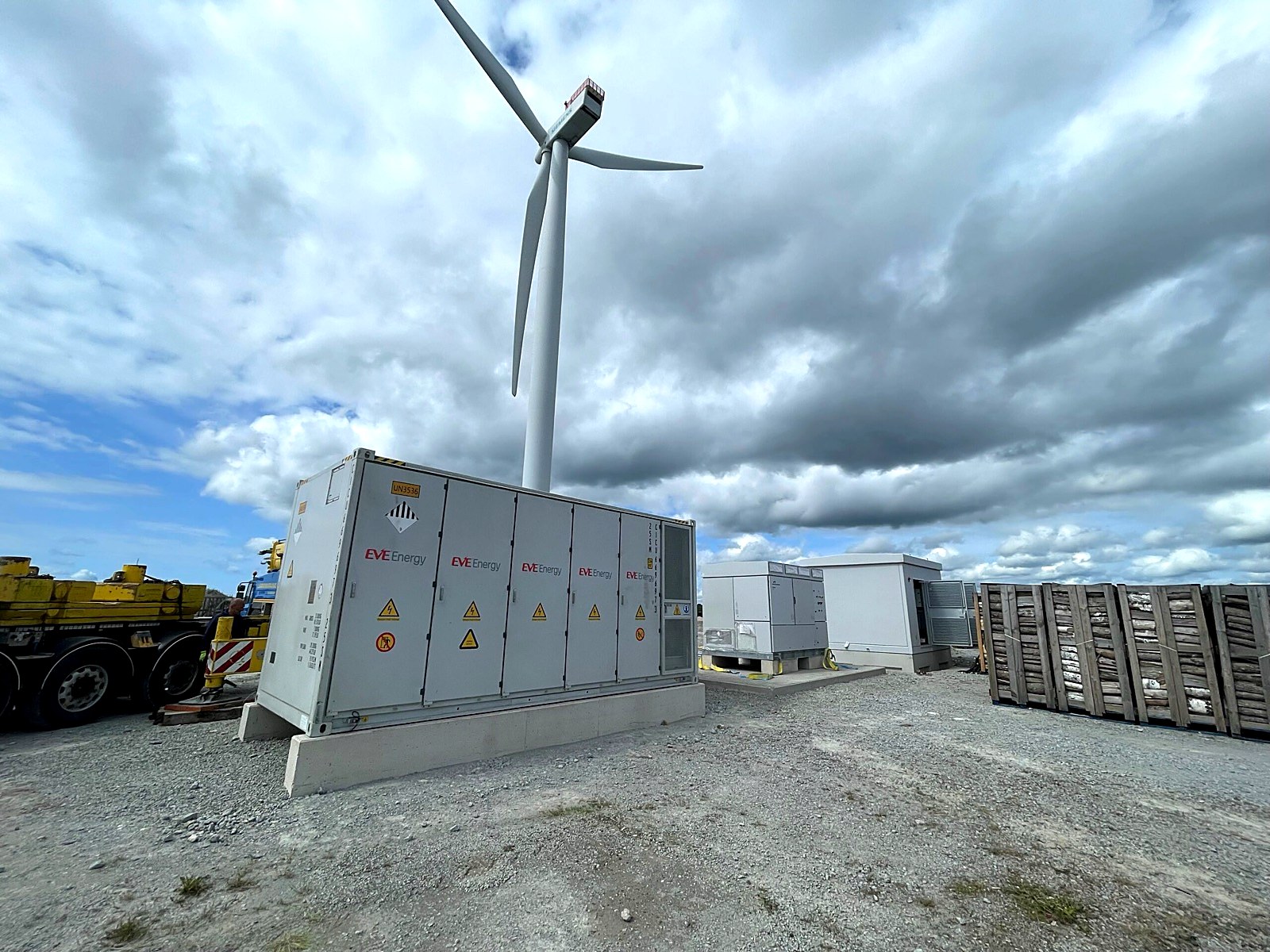
A wind park operator on Saaremaa added a 2 MW / 4 MWh battery beside 6 MW of wind. It captures the surplus, smooths the output and works on the aFRR and mFRR markets every day.
6MW
of wind, with a 2 MW / 4 MWh battery beside itAlso running: Western Estonia solar park (1 MW / 2 MWh) · Solar park turned hybrid (500 kW / 2.15 MWh) · CHP plant battery (375 kW / 783 kWh)
Included in every project: Sizing from your data · Hardware · Grid paperwork · Grant help · Testing and training · Market connection
Send us your park's data. We size the battery and show the extra revenue.
Send your park data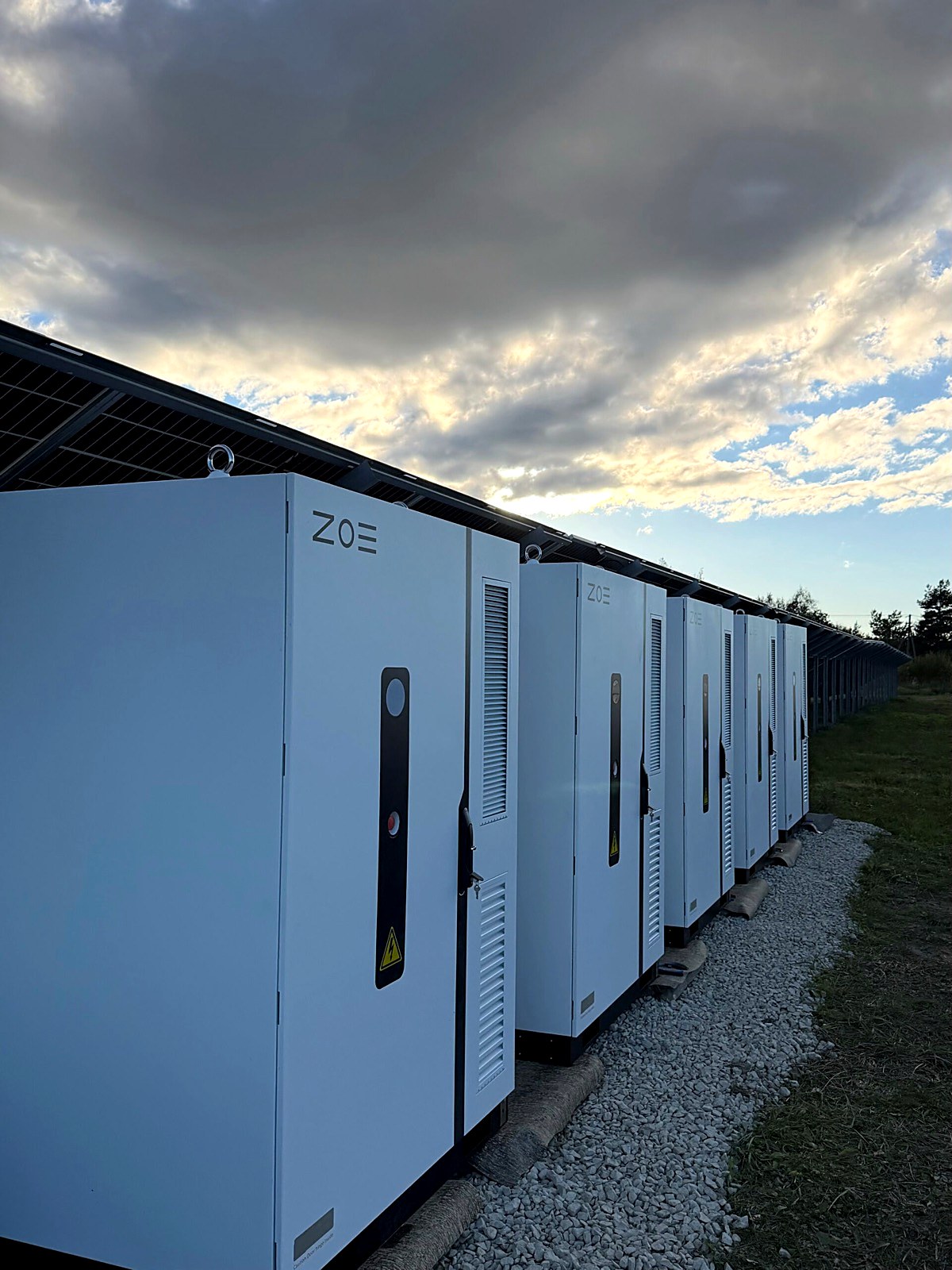
We build 50 kW – 10 MW systems and size each battery from the park's own production data. Larger projects we look at case by case.
A small project on low voltage next to an existing solar or wind park can be running about a month after the decision. Larger systems take longer, up to 8 months for the largest, mostly because of manufacturing and shipping.
Yes. The battery is added to your existing park and uses the same grid connection. It stores the surplus you would otherwise sell cheap or curtail.
Yes. When the wind blows, prices fall for every producer at once, so the battery stores the surplus and sells it at better hours. On Saaremaa a 2 MW / 4 MWh battery runs beside 6 MW of wind and works daily on the aFRR and mFRR markets.
Yes, mainly by putting an under-used grid connection to work. A CHP plant whose subsidies are ending often stands idle outside the heating season; through the same connection the battery shifts output to peak hours and earns on grid-balancing reserves. At one CHP plant, a 375 kW / 783 kWh battery has used the plant's existing grid connection on the energy markets since September 2026. CHP plant reference
No. An optimisation partner runs the battery on the markets. We help you choose the partner and stay your contact.
Price shifting between cheap and expensive hours on the day-ahead and intraday markets, and grid-balancing reserves such as aFRR and mFRR, which currently bring most of the income. The mix depends on your park and grid connection. Solar park revenue with a battery
The cost depends on the size and the site, so we give you a first estimate from your own data before any commitment. Payback is about 3 years, an estimate based on the last 2 years of Nordess projects; the western Estonia solar park reached about 2 years. Battery price and payback time