Solar park revenue falls because every park produces at the same time, so midday prices are low or even negative. A battery stores the surplus, sells it in the evening when prices are higher and earns on the reserve markets in between. In western Estonia, a 1 MW / 2 MWh battery raised a park's revenue up to ten times, with a payback of about two years.
- Midday prices fall because every solar park produces at the same time.
- A battery moves the surplus to the evening and earns on reserve markets in between.
- In western Estonia it raised a park's revenue up to ten times, with about two years' payback.
A park that earns less every sunny year
When the park was planned, the numbers looked good: free sunshine, a solid grid connection, a predictable income. Then more parks were built around it. Now the sunniest hours, the ones the park was built for, are often the hours when its power is worth the least.
This is not a problem of one park. It is how the market works once there is a lot of solar and wind, and it is getting stronger. The good news: it is also exactly the situation a battery is made for.
Why midday power is the cheapest
When the sun shines, every solar park in the region produces at once. Supply jumps, demand stays the same and the price falls, sometimes below zero. Wind parks see the same on windy days. Economists call it cannibalisation: the more solar and wind join the grid, the less power is worth in exactly the hours they produce.
The energy plans of Estonia, Latvia and Finland add a lot of new wind and solar. That makes the swings between cheap and expensive hours likely to grow, not shrink.
Three things that eat into park revenue
- Low prices when you produce. The park’s costs do not go down, but revenue per hour does.
- Curtailment. When the grid cannot take all the power, or the price turns negative, part of the production is switched off and simply lost.
- An idle grid connection. A solar park uses its grid connection fully for only about 20% of the year. The rest of the time, an expensive asset sits mostly unused.
How a battery changes this
- Shifts energy in time. The midday surplus is stored and sold in the evening, when the sun is down and prices are higher.
- Earns on reserve markets. Today a large share of battery income comes from aFRR and mFRR, where the battery stands ready to balance the grid.
- Uses the connection at night and in winter. The battery can trade through the grid connection even when the park is not producing.
Why reserve markets matter right now
Today a large share of battery income comes from the reserve markets, aFRR and mFRR, rather than from simply buying low and selling high. That income can change as more batteries join, which is why speed matters: a battery that is running this year earns in today’s market, not in next year’s.
For large projects, banks usually look past the reserve markets and base their analysis on the price spread over 18–20 years. The spread is the long-term case; reserve income is the bonus that makes the first years strong.
Examples from Estonia
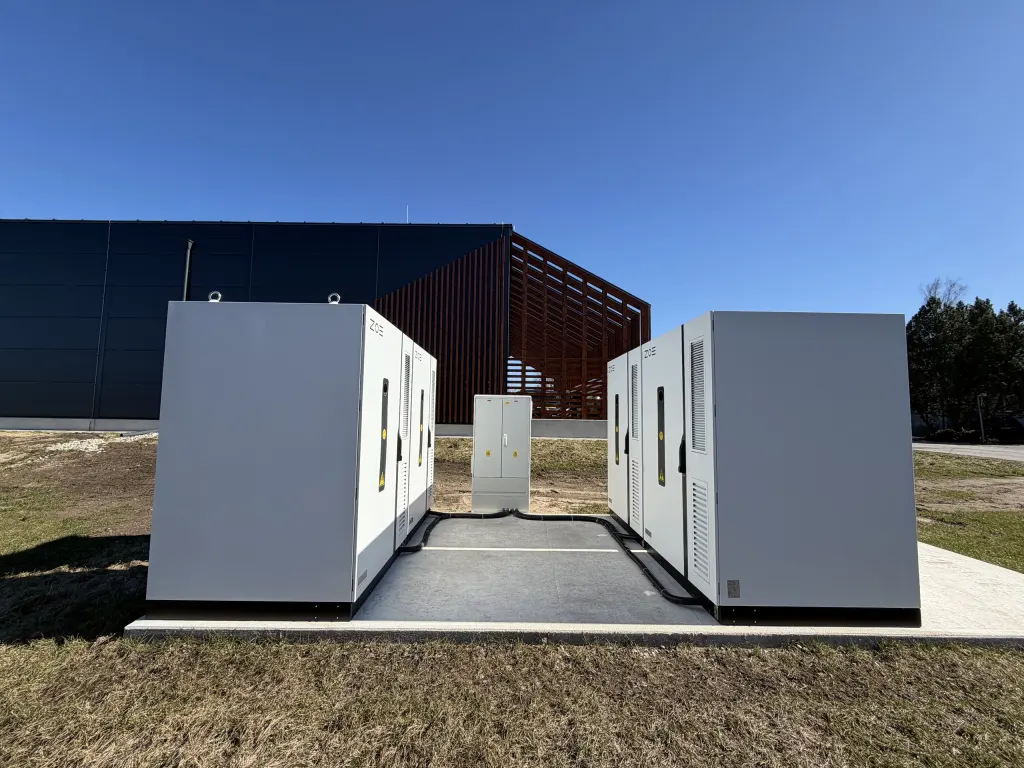
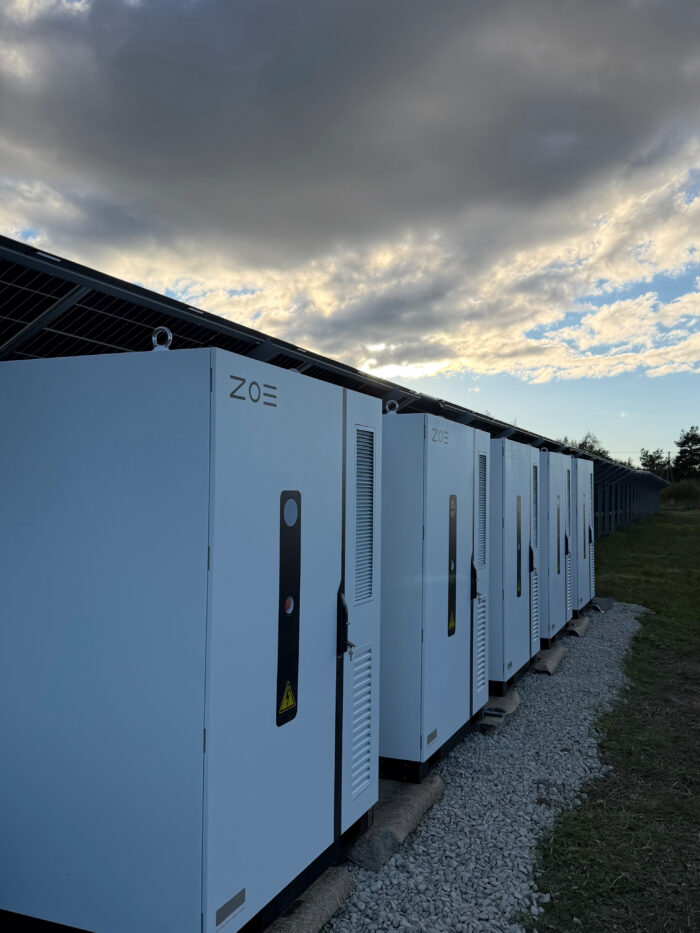
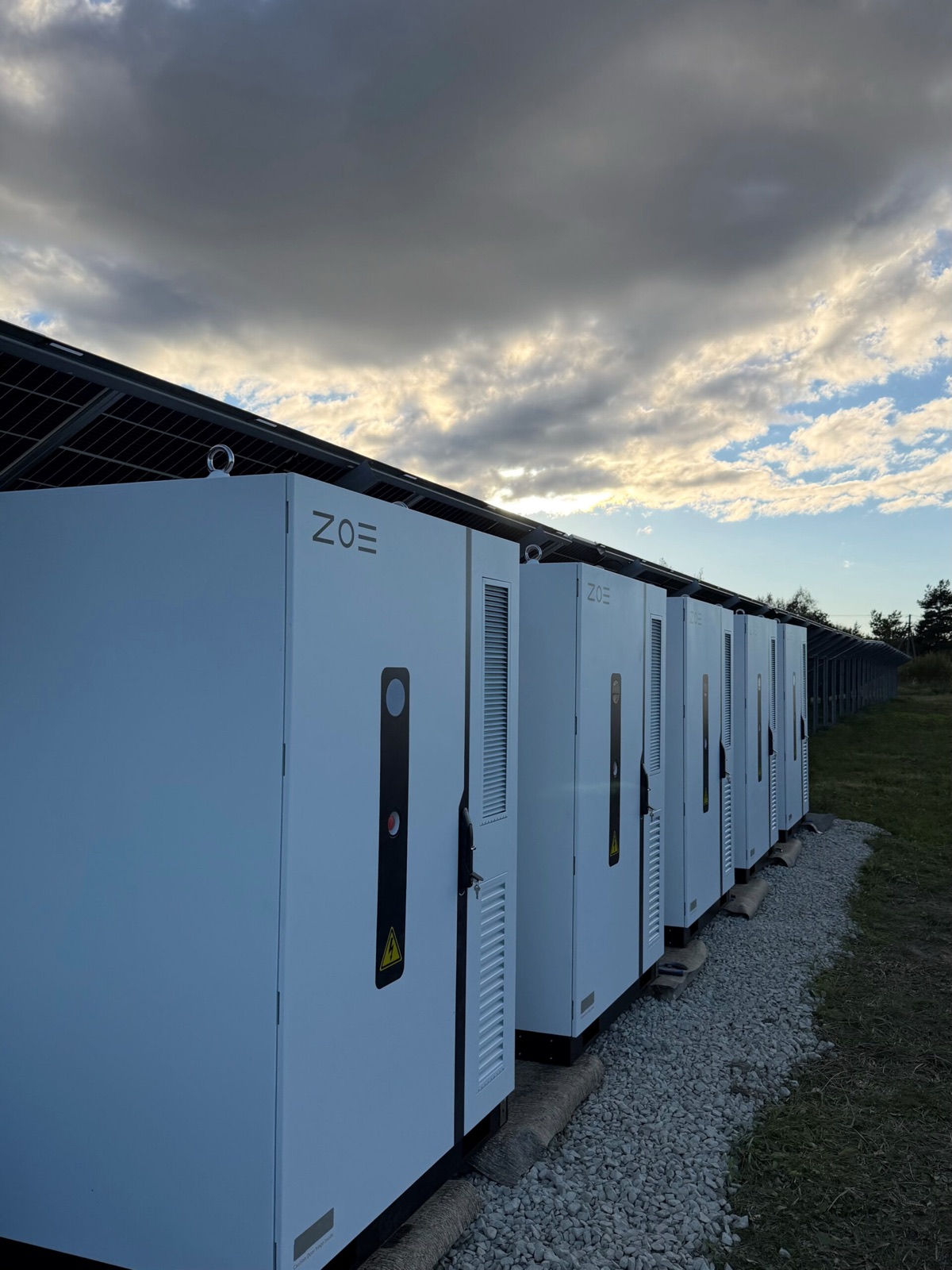
- Western Estonia solar park: a 1 MW / 2 MWh battery, delivered and commissioned within two months, trades on the day-ahead, intraday, aFRR and mFRR markets. Revenue rose up to ten times compared with solar alone; payback about two years. Reference →
- Northern Estonia solar park: a 500 kW / 2.15 MWh battery cuts curtailment and earns on the day-ahead, intraday and balancing markets. Reference →
- Saaremaa wind park: a 2 MW / 4 MWh battery beside 6 MW of wind stabilises output and works daily on aFRR and mFRR. Reference →
How big should the battery be?
There is no single right size, but a few rules of thumb help.
- Duration. Most park batteries store two or four hours of their power: enough to move midday surplus into the evening peak.
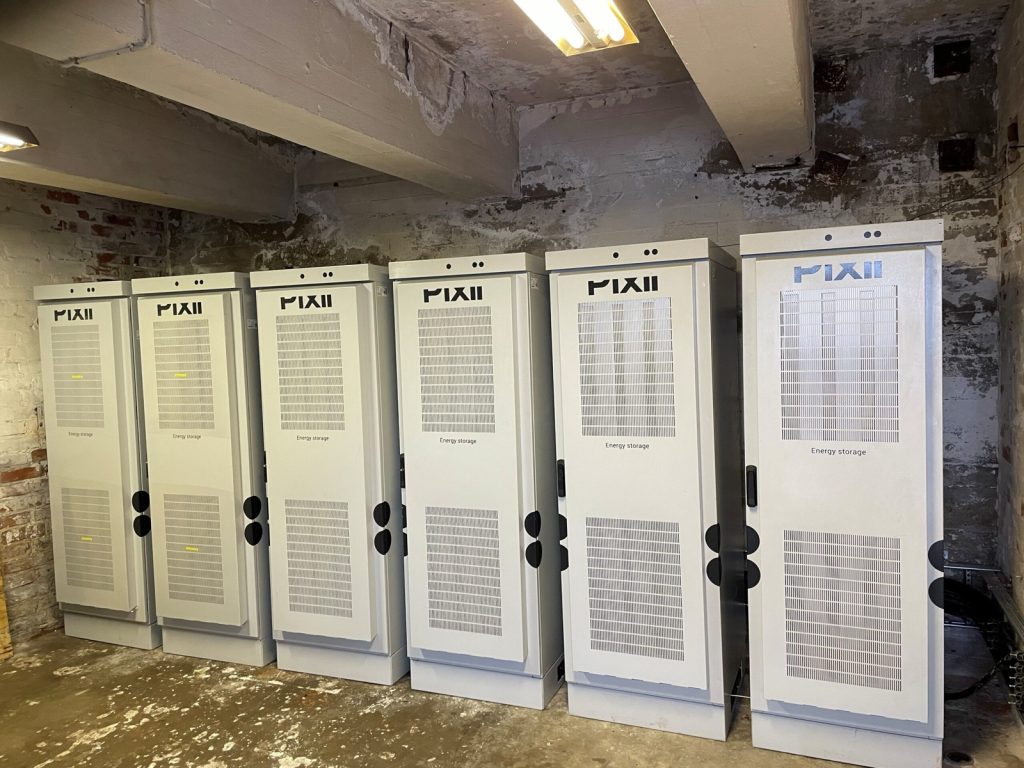
- Format. Up to about 1 MW, modular battery cabinets next to the existing inverters are usually the best fit. Above one or two megawatts, a container system often makes more sense.
- Connection. Using the park’s existing grid connection keeps the investment smaller and the project faster.
We size every battery from the park’s own production data, from 50 kW to 10 MW.
Does a battery fit my park?
A battery is worth a closer look if your park is curtailed on sunny or windy days, sells most of its power in the cheapest hours, or has a grid connection that sits idle much of the year. It works for solar and wind parks alike, and for small hydro and CHP plants whose subsidies are ending.
A small project on low voltage can be running in about a month, so you reach the market while conditions are good. Read more on our energy parks page.